
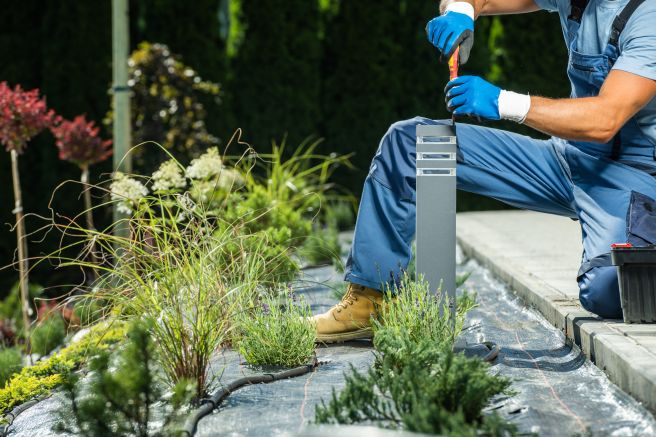
Protecting Your Landscaping Business From the Ground Up
Landscaping looks beautiful when the job is finished. But getting there can involve chainsaws, riding mowers, trailers, heavy equipment, chemicals, ladders, employees, customers' property and a lot of time spent working around other people's homes and businesses.
For a landscaping contractor, one unexpected accident can turn a profitable project into a very expensive problem. A rock gets thrown through a window. A customer trips over equipment. An employee is injured while operating a mower. A trailer is stolen overnight. A tree comes down in the wrong direction.
That's why landscaping contractor insurance isn't simply another business expense. It's part of protecting the business you've worked hard to build.
Your Business Is More Than Mowing Lawns
Many landscaping businesses start small. Maybe you began with a pickup, a mower and a handful of customers. Over time, the business grew. You added employees, equipment, trailers and larger commercial jobs.
And that's when your insurance needs can become much more complicated.
A landscaping contractor may perform everything from routine lawn maintenance to planting, irrigation, tree work, hardscaping, grading, retaining walls or landscape construction. Each type of work can create different risks.
Your insurance should reflect what you actually do—not what you did when you first started the business.
General Liability: Your First Line of Defense
Imagine you're working at a customer's home and a piece of equipment damages their property. Or a rock from a mower strikes a vehicle. Or a customer walks through your work area, falls and is injured.
These are the kinds of situations where commercial general liability insurance can become extremely important.
General liability coverage is designed to help protect your business from covered claims involving bodily injury, property damage and certain other liabilities arising from your business operations.
And don't forget about completed work. A landscaping project may look perfect when you leave, only for a problem to develop later. Depending on the circumstances and policy terms, products and completed operations coverage can help address certain claims arising from completed work.
Your Truck and Trailer Are Part of the Business
For most landscaping contractors, getting to the job is almost as important as doing the job.
You may have pickup trucks, trailers, vans or other vehicles transporting employees, mowers, tools, plants, materials and equipment from one property to another.
That creates a separate set of insurance considerations.
Commercial auto insurance can provide coverage for eligible business vehicles and the risks associated with using them for business purposes. Your personal auto policy may not provide the protection you assume it does when a vehicle is primarily being used for business.
It's also important to tell your insurance professional about what you're hauling, who drives the vehicles and how the vehicles are used. A landscaping business that primarily uses a truck to commute is very different from one that uses it every day to haul equipment and trailers to job sites.
What About All That Equipment?
Your equipment represents a significant investment—and much of it is constantly moving from one job site to another.
Commercial mowers, trimmers, blowers, chainsaws, edgers, compact equipment, generators and other tools can cost thousands of dollars to replace.
Depending on how your business operates, you may need to consider coverage for business personal property, equipment and mobile tools, including how those items are covered while they're away from your primary business location.
Don't assume that everything inside your truck or trailer is automatically covered just because you have commercial auto insurance. Different policies cover different types of property and risks.
Your Employees Are One of Your Biggest Risks—and Your Biggest Assets
Landscaping is physical work. Employees may operate powerful equipment, lift heavy materials, work on uneven ground and spend hours outdoors in changing conditions.
If you have employees, workers' compensation insurance is an important part of protecting both your workers and your business. Oregon generally requires employers with subject workers to carry workers' compensation coverage, although specific exemptions exist. :contentReference[oaicite:0]{index=0}
It's also important to keep your insurance professional informed when your business changes. Hiring additional employees, changing payroll, adding new types of work or expanding into different services can affect your insurance needs.
The Certificate of Insurance That Gets You the Job
If you've worked with commercial property owners, general contractors or property managers, you've probably heard the phrase "certificate of insurance."
Commercial customers frequently want proof that a contractor carries appropriate insurance before allowing work to begin. Some contracts may also require specific liability limits, additional insured status, waivers of subrogation or other insurance provisions.
That means having the right policy isn't always enough. The policy may also need to meet the requirements of the contract.
Before signing a large commercial landscaping contract, have your insurance professional review the requirements. Finding out that your policy doesn't satisfy the contract after you've already won the job can create an unnecessary headache.
Don't Forget About Your Oregon License and Bond
If you're an Oregon landscape contracting business, insurance isn't simply something you purchase for peace of mind. It can also be part of maintaining your business license.
The Oregon Landscape Contractors Board currently requires licensed landscape contracting businesses to maintain liability insurance and a surety bond. Beginning January 1, 2026, the standard surety bond requirement increased to $20,000, while the minimum liability insurance requirement is $500,000. Workers' compensation is required when applicable. :contentReference[oaicite:1]{index=1}
Keeping that coverage current is important. If required insurance expires and updated documentation isn't provided, a landscape contracting business can face problems with its license. :contentReference[oaicite:2]{index=2}
Five Landscaping Insurance Mistakes to Avoid
1. Assuming your personal auto insurance covers business use.
Business vehicles and business use can require commercial auto coverage.
2. Forgetting to insure newly purchased equipment.
That brand-new mower or piece of equipment can represent a substantial investment.
3. Not telling your insurer about new services.
Adding tree work, irrigation, excavation, hardscaping or other services can change your risk profile.
4. Hiring employees without reviewing workers' compensation requirements.
Your insurance needs can change quickly when you add workers.
5. Choosing coverage based only on price.
The cheapest landscaping insurance policy isn't necessarily the policy that provides the protection your business actually needs.
Build Your Business With the Right Protection
You spend your days helping other people's properties look their best. Your insurance should help protect the business you've built while you're doing it.
Whether you're a solo landscaper, a growing lawn-care company or an established landscaping contractor with employees and commercial accounts, your insurance needs can change as your business grows.
Matt Manderville Insurance Agency can help you review your landscaping contractor insurance, including general liability, commercial auto, equipment coverage, workers' compensation and other coverage that may be appropriate for your business.
Ready to make sure your business is properly protected? Give us a call at 208-882-1920 to schedule a conversation about your landscaping insurance needs.